
For students with lower verbal scores
An interactive teaching activity where students take on roles related to a subject they are studying and act out scenarios or key moments. This could include playing historical figures to recreate debates, embodying characters from a novel to perform scenes, or simulating real-world events in subjects like science or geography.
The activity transforms abstract concepts into tangible, relatable experiences, helping students engage with the material and practise verbal and expressive skills in a meaningful context.
How they help
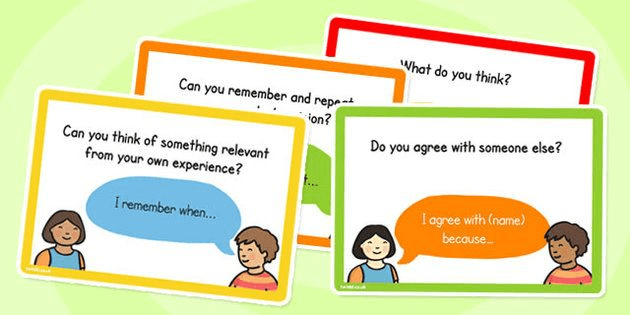
Speaking frames are particularly beneficial for students with poor verbal ability. By offering a clear structure, they enable learners to focus on content rather than struggling to form coherent sentences. This builds confidence and fluency over time, making them an essential tool in the classroom.
Examples of Speaking Frames
“I agree with this because…”
“One reason is that…”
“I think this because…”
Tips
Start with Simple Frames
Begin with basic sentence starters, particularly for younger students (ages 7-10), such as “I like this because...”
Introduce Complexity Gradually
For older students (ages 11-16), use more analytical frames like “One perspective is that… However, another view might be…”
Integrate Frames into Discussions
Use them during class debates, group work, or written tasks to encourage structured thinking.
Monitor Progress
Observe students’ ability to move beyond the frames as their confidence grows.
Secondary Age Consideration
In secondary classrooms, speaking frames should support more analytical, subject-specific talk, helping students organise ideas clearly and participate confidently in discussion.
Support students to:
Use more complex sentence structures, e.g. “One perspective is… however…”, “This suggests that… because…”
Link ideas explicitly, using connectives such as however, therefore, in contrast
Apply frames to subject content, particularly in subjects requiring explanation and evaluation (e.g. English, science, humanities).
Move gradually beyond the frames, encouraging students to adapt and internalise structures over time.
Use frames in discussion and debate, supporting contributions in pair work, group tasks, and whole class dialogue.
You should model how to use and adapt frames, ensuring they act as a scaffold rather than a script, building independence in verbal reasoning over time.
© Talamo 2026
Terms & conditions