
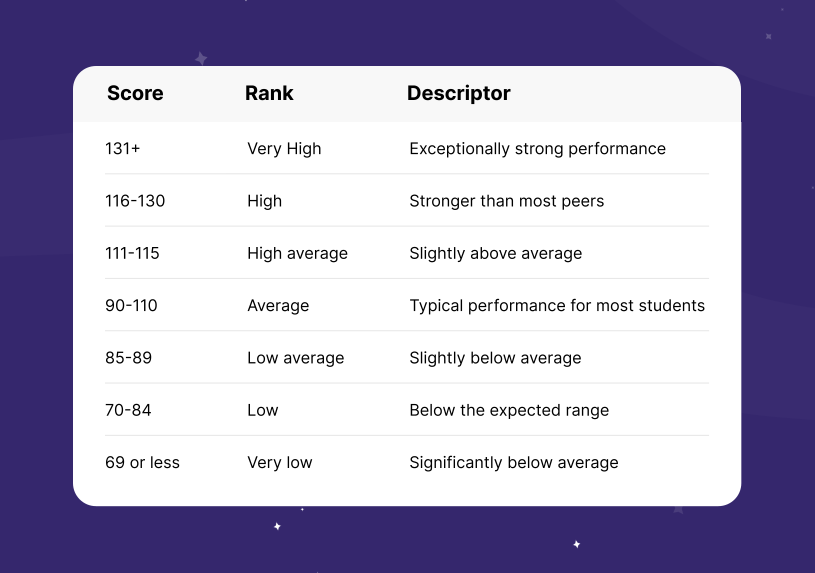
Standardisation table

Each Talamo test produces a set of 8 standard scores, which shows how a student’s performance compares to others of the same age. The average score is set at 100, and the scale is divided using standard deviations (SD) — statistical steps that reflect meaningful differences in performance.

Standardisation table

Each Talamo test produces a set of 8 standard scores, which shows how a student’s performance compares to others of the same age. The average score is set at 100, and the scale is divided using standard deviations (SD) — statistical steps that reflect meaningful differences in performance.

Standardisation table

Each Talamo test produces a set of 8 standard scores, which shows how a student’s performance compares to others of the same age. The average score is set at 100, and the scale is divided using standard deviations (SD) — statistical steps that reflect meaningful differences in performance.

Our table follows the same principles used in standardised educational and psychological tests:

  1. Centred on 100: This represents the average performance for the population.

  2. Built on 15-point intervals: Each major step (e.g. 85, 100, 115) reflects about one standard deviation — a meaningful statistical difference.

  3. Balanced around the mean: The scale is symmetrical, so “Above” and “Below” ranges mirror one another.

  4. Clear and interpretable: We include finer bands around the average (like High Average and Low Average) so teachers and parents can see smaller differences without over-interpreting them.

  5. Aligned with national standards: These bands match those used by leading test publishers and are designed to make comparisons across different abilities and ages consistent.

© Talamo 2025

Terms & conditions

© Talamo 2025

Terms & conditions

© Talamo 2025

Terms & conditions