Update, October 2026: we first published this post in 2025, and the figures in it are from that time. You’ll find where things stand today under “Since then”.
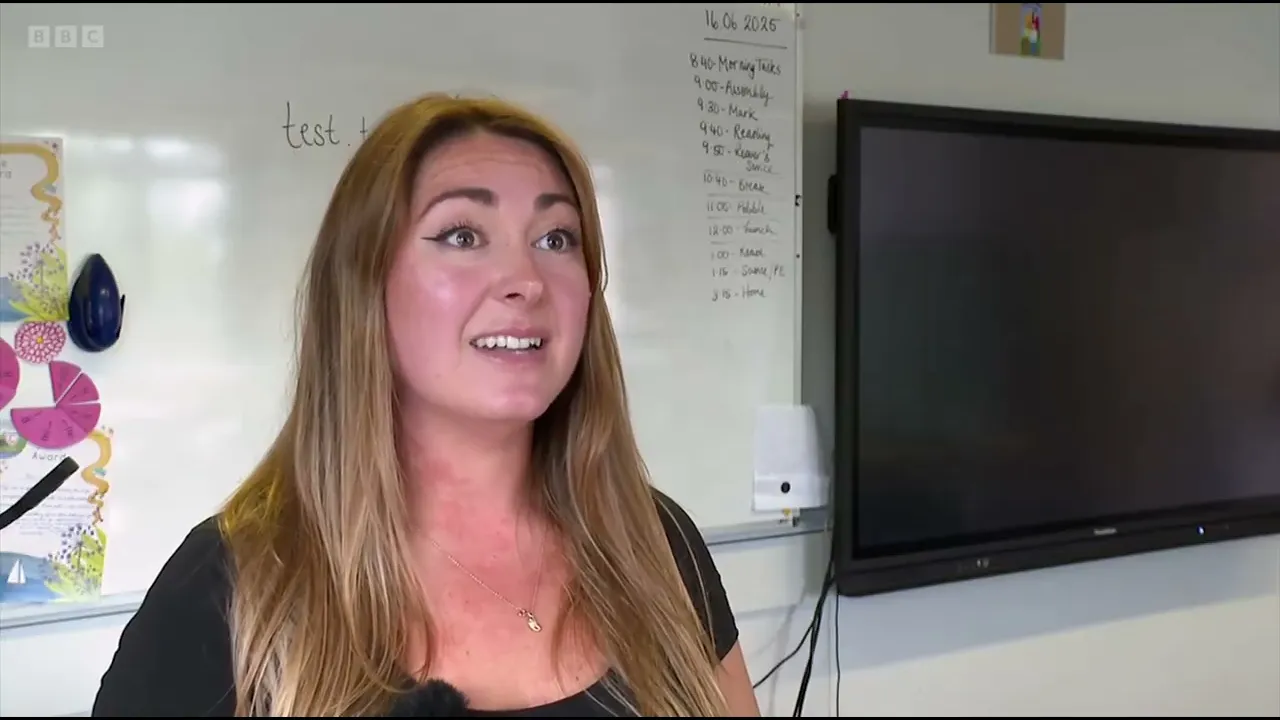
In July 2025, BBC News reported that hundreds of UK schools were trialling Talamo, our digital tool for dyslexia screening. It was a big moment for a small team, and a sign of how quickly schools were taking up screening.
Talamo on the news, from our YouTube channel.
Our BBC moment
The piece, headlined “Tool for mass dyslexia screening being developed”, reflected what teachers had been telling us: schools want a simple way to spot pupils who may need support earlier, without months of waiting or a complicated set-up. A whole class can take the screener in one sitting, and every pupil gets a report with practical next steps.
“We hope that this gives schools the ability to do the screening because, if it’s not accessible, and it’s not cost efficient, then it won’t happen.”
— Jamie Wace, founder and CEO of Talamo, speaking to BBC News
Read the full article on BBC News →
Around 300 schools at the time
When the piece was published, Talamo had been rolled out to around 300 schools. Schools told us the draw was simple: a quick roll-out, tasks pupils could do in the classroom, and results teachers could act on.
“I think that’s really powerful to help them be able to move forward to secondary school with those strategies in place and understanding how their brains work.”
— Catherine Prosser, Assistant Head at Mawnan Primary School, Cornwall, speaking to BBC News
Why early screening matters
Spotting learning differences early means support can start before a pupil’s confidence takes a knock. Screening turns identification from a slow, one-at-a-time referral into a routine part of school life, and gives families and staff a shared, clear picture to work from.
“Dyslexia should never be a barrier to a brilliant education, or to what children can go on to achieve.”
— A Department for Education spokesperson, quoted by BBC News
Since then
A lot has happened since the BBC piece. Talamo is now used in over 1,300 UK schools and has screened over 25,000 children. Schools can choose from three assessments: Cognitive & Dyslexia, Executive Function and Maths & Dyscalculia. The Cognitive & Dyslexia norms were rebuilt in summer 2026, from 4,580 pupils in 85 UK schools.
The way it works is still simple. Pupils complete short tasks on a school device with headphones, with spoken instructions and practice items, in about 35 to 45 minutes, which can be split across sittings. Every report is reviewed by a person before it’s released, normally within 48 hours.
In June 2026, having been selected through the BDA’s two-stage tender process, Talamo began to be signposted by the British Dyslexia Association for dyslexia screening: the BDA considers Talamo a suitable screening tool for children aged 10–16. Our Cognitive & Dyslexia assessment itself is standardised for ages 7–16. We explain exactly what the BDA’s view covers in Our relationship with the British Dyslexia Association.
In June 2026 we also ran our first We Love SENCos conference in London, and the second takes place in Birmingham on 17 November 2026.
Read about We Love SENCos II in Birmingham →
To every teacher, SENCo and head who has cheered us on along the way: thank you. You’ll find more news, research and practical guides on our blog.
BBC News (1 July 2025): Tool for mass dyslexia screening being developed
Talamo on YouTube: Talamo on the news
British Dyslexia Association: Dyslexia screening (Talamo is signposted for children aged 10–16)
Talamo Cognitive & Dyslexia technical manual, v1.4 (September 2026): norms, administration and report review. Want more technical detail? Ask us and we’ll share it