Executive Function

Executive Function

Executive Function

Observation shows how a difficulty looks in class. This screening assessment shows what sits behind it, so you can target support and make clearer referral decisions.

Observation shows how a difficulty looks in class. This screening assessment shows what sits behind it, so you can target support and make clearer referral decisions.

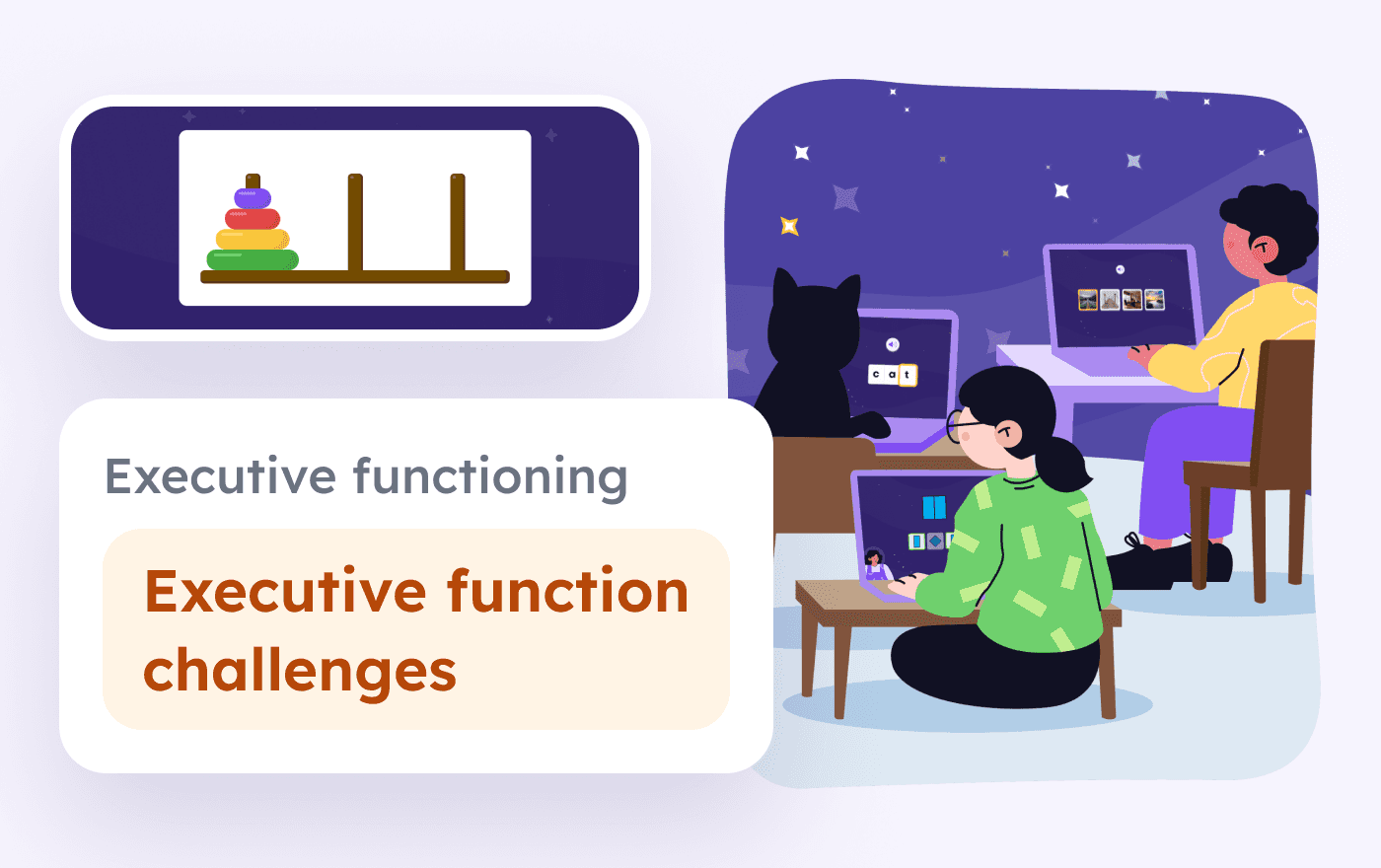
Illustration: pupils working on laptops in Talamo’s starry test world with the Talamo cat, beside the real Block move task screen and cards from Arthur Brown’s sample report showing his executive function profile and the result ‘Executive function challenges’.
Illustration: pupils working on laptops in Talamo’s starry test world with the Talamo cat, beside the Block move task screen and Arthur Brown’s sample result, ‘Executive function challenges’.

Age range

7–16

Years 2 to 12

Years 2 to 12

Time

35–45 mins

35–45 mins

35–45 mins

Can be split across sittings

Can be split across sittings

Format

Online, in school

Online, in school

Online, in school

Whole class, small group or one pupil

Whole class, small group or one pupil

Who runs it

A teacher or TA

A teacher or TA

A teacher or TA

No specialist qualification needed

No specialist qualification needed

What you get

Executive function profile

Executive function profile

Executive function profile

Plus a challenges indicator, Level of Need and next steps

Plus a challenges indicator, Level of Need and next steps

What it measures

Six areas, one clear profile

Six areas, one clear profile

Six areas, one clear profile

Executive functions are the thinking skills that help a pupil stay on task, hold back a hasty response, keep instructions in mind, switch approach and plan ahead. They develop a great deal through childhood. Rather than giving a single verdict, the assessment shows where in a pupil’s profile any difficulty is concentrated.

Executive functions are the thinking skills that help a pupil stay on task, hold back a hasty response, keep instructions in mind, switch approach and plan ahead. They develop a great deal through childhood. Rather than giving a single verdict, the assessment shows where in a pupil’s profile any difficulty is concentrated.

Executive function

Sustained attention

Sustained attention

Sustained attention

Staying focused and responding consistently through a long, repetitive task. It’s what helps a pupil follow an extended explanation or stick with a long piece of independent work.

Staying focused and responding consistently through a long, repetitive task. It’s what helps a pupil follow an extended explanation or stick with a long piece of independent work.

Tasks:

Focus

Executive function

Inhibitory control

Inhibitory control

Inhibitory control

Holding back a quick response when it isn’t the right one, like pausing to check before answering or handing in work.

Holding back a quick response when it isn’t the right one, like pausing to check before answering or handing in work.

Tasks:

Focus

Left or right

Executive function

Cognitive flexibility

Cognitive flexibility

Cognitive flexibility

Switching between rules, such as matching by colour and then by shape, or trying another approach when the first one stalls.

Switching between rules, such as matching by colour and then by shape, or trying another approach when the first one stalls.

Tasks:

Colours & Shapes

Executive function

Executive planning

Executive planning

Executive planning

Thinking ahead and working out the steps needed to reach a goal, as in planning an essay or a multi-step task.

Thinking ahead and working out the steps needed to reach a goal, as in planning an essay or a multi-step task.

Tasks:

Block move

Executive function

Working memory

Working memory

Working memory

Holding information in mind while doing something with it, such as following a set of instructions.

Holding information in mind while doing something with it, such as following a set of instructions.

Tasks:

Word memory

Memory

Context

Processing speed

Processing speed

Processing speed

How quickly a pupil takes in simple information and responds. It gives useful context, but it isn’t an executive function, so it doesn’t feed the challenges indicator.

How quickly a pupil takes in simple information and responds. It gives useful context, but it isn’t an executive function, so it doesn’t feed the challenges indicator.

Tasks:

Shape search

Numbers

What your pupils will do

Eight short tasks

Eight short tasks

Eight short tasks

Each task has a friendly name and feels more like a game than a test.

Each task has a friendly name and feels more like a game than a test.

Introduction video

Spoken instructions

Practice with feedback

Resume later

How a session starts

Talamo test screen: ‘Enter your code’ with an 8-character Login ID typed into the boxes, on the starry test background.

1

Pupils type their own 8‑character Login ID

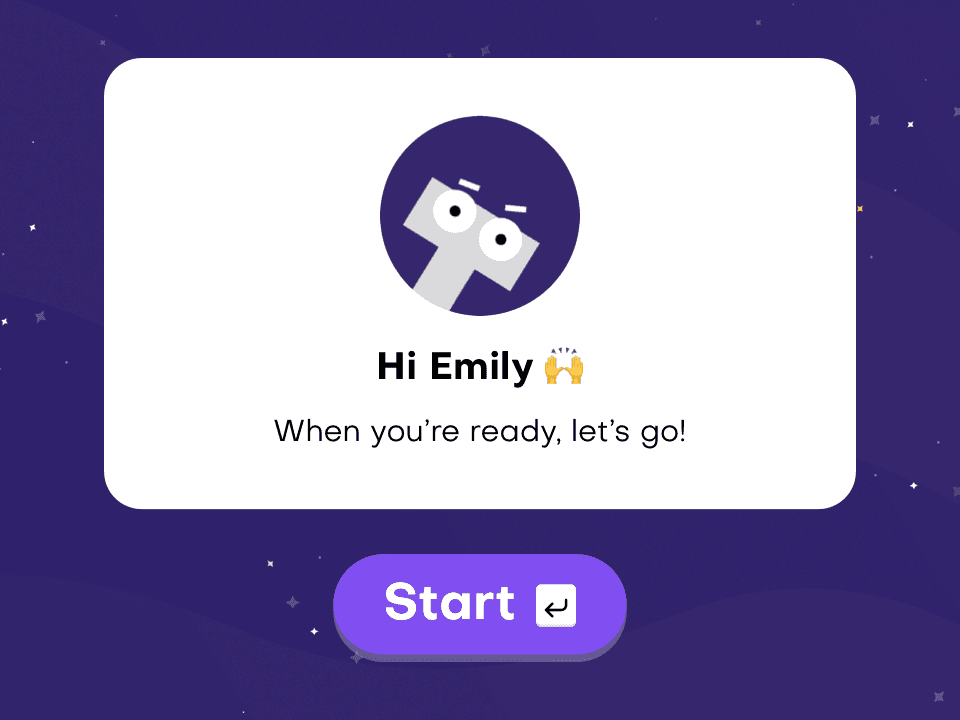
Talamo test screen: a welcome card with the Talamo character that says ‘Hi Emily, when you’re ready, let’s go!’ above a Start button.

2

They press Start when they’re ready

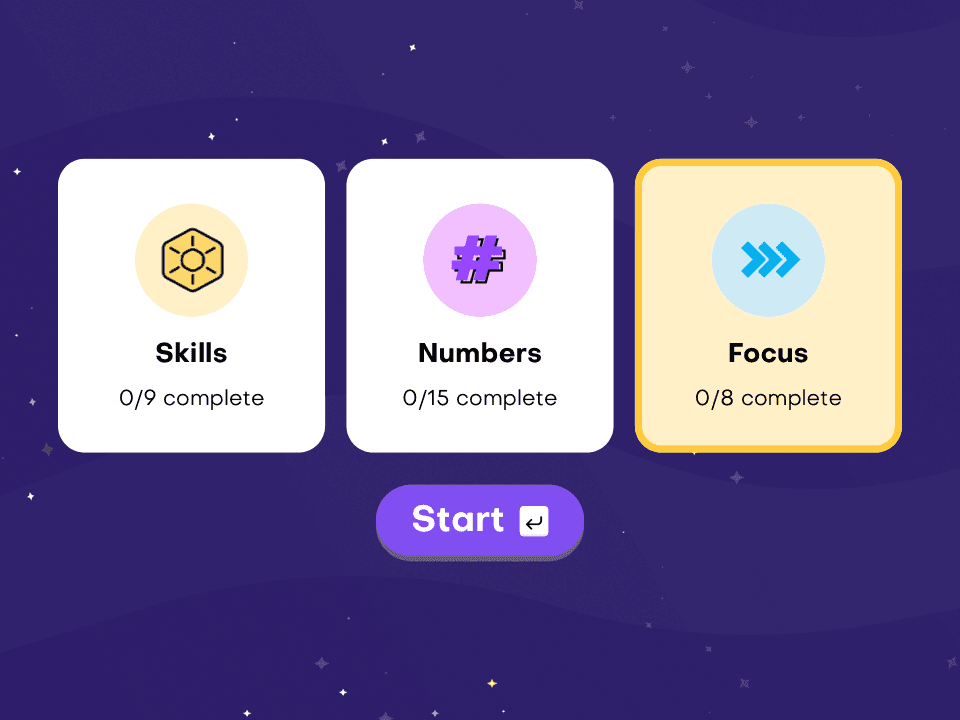
Talamo test screen: three tiles to choose from, Skills (0 of 9 complete), Numbers (0 of 15) and Focus (0 of 8, selected), above a Start button.

3

They choose Focus, the name pupils see for this assessment

Task by task

Each card shows the name pupils see, the task’s formal name and the skill it measures. The first task is also called Focus, the name pupils see for the whole assessment.
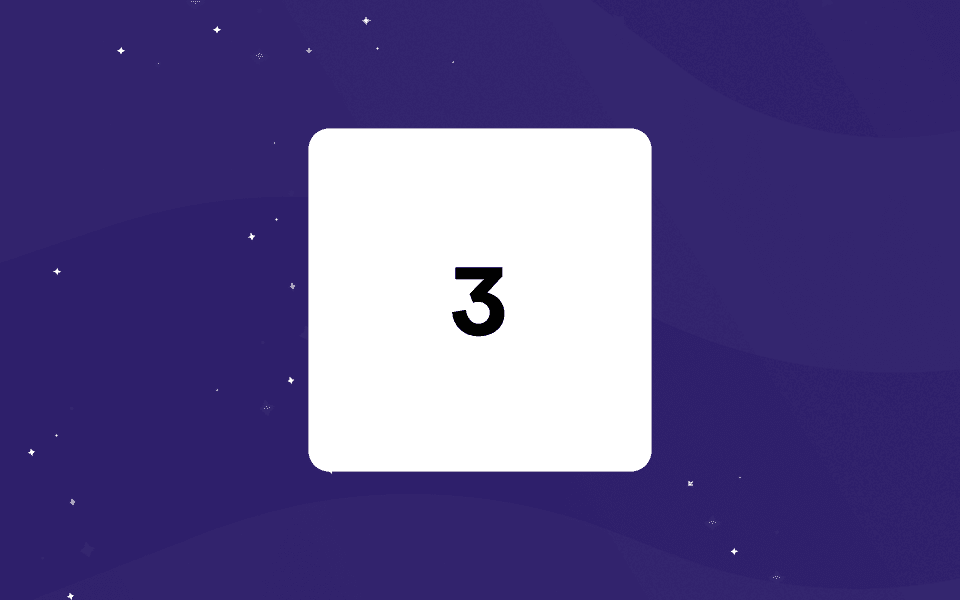
  • Talamo test screen, SART (Focus): the number 3 flashed on a white card in the middle of the starry test background.

    Focus

    SART

    Numbers flash on screen. The pupil presses the spacebar for every number except 3, and holds back on 3.

    Sustained attention and inhibitory control

  • Talamo test screen, Flanker (Left or right): a row of five fish, the middle one facing left and the others facing right, above Left and Right buttons, with Left selected.

    Left or right

    Flanker

    Says which way the middle fish is pointing while the fish around it point the same or the opposite way. This task is timed.

    Inhibitory control

  • Talamo test screen, Task Switching (Colours & Shapes): a red square with a ‘Colour’ cue below it and two answers, ‘Red / circle’ (selected) and ‘Blue / square’.

    Colours & Shapes

    Task Switching

    Sees a coloured shape and is told to match it by colour or by shape, switching between the two rules.

    Cognitive flexibility

  • Talamo test screen, Tower (Block move): four coloured rings stacked on the first of three pegs.

    Block move

    Tower

    Moves blocks between towers one at a time, never putting a bigger block on a smaller one. Ages 7 to 10 use three blocks; ages 11 to 16 use four.

    Executive planning

  • Talamo test screen, Verbal Attention (Word memory): a listen button above four word choices, Cat, Lizard, Two and House.

    Word memory

    Verbal Attention

    Hears a list of words, then an instruction to pick out particular ones from the sequence.

    Working memory

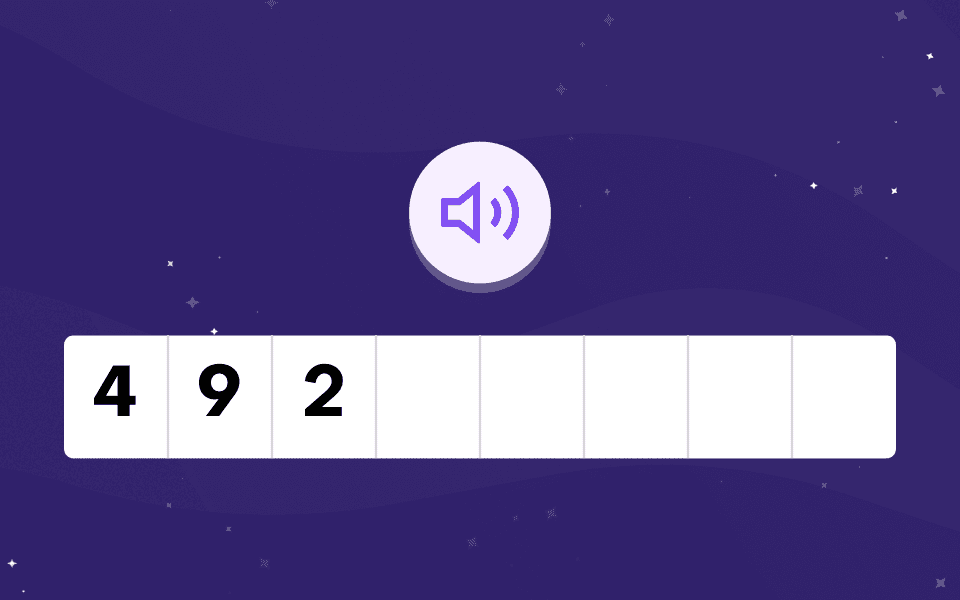
  • Talamo test screen, Numbers Reversed (Memory): a listen button above answer boxes where the pupil has typed 4, 9, 2.

    Memory

    Numbers Reversed

    Hears a string of numbers and types them backwards.

    Working memory

  • Talamo test screen, Symbol Search (Shape search): ‘Can you see’ a triangle ‘or’ an octagon ‘below?’, a row of shapes that includes the triangle, and Yes and No buttons, with Yes selected.

    Shape search

    Symbol Search

    Sees two target shapes, then a row of shapes, and says whether either target is in the row. This task is timed.

    Processing speed

  • Talamo test screen, Number Pattern Matching (Numbers): a row of numbers, 5 2 9 1 2, with the first 2 selected.

    Numbers

    Number Pattern Matching

    Scans a row of numbers and selects the ones that appear twice. This task is timed.

    Processing speed

Talamo test screen, SART (Focus): the number 3 flashed on a white card in the middle of the starry test background.

Focus

SART

Numbers flash on screen. The pupil presses the spacebar for every number except 3, and holds back on 3.

Sustained attention · Inhibitory control

Talamo test screen, Flanker (Left or right): a row of five fish, the middle one facing left and the others facing right, above Left and Right buttons, with Left selected.

Left or right

Flanker

Says which way the middle fish is pointing while the fish around it point the same or the opposite way. This task is timed.

Inhibitory control

Talamo test screen, Task Switching (Colours & Shapes): a red square with a ‘Colour’ cue below it and two answers, ‘Red / circle’ (selected) and ‘Blue / square’.

Colours & Shapes

Task Switching

Sees a coloured shape and is told to match it by colour or by shape, switching between the two rules.

Cognitive flexibility

Talamo test screen, Tower (Block move): four coloured rings stacked on the first of three pegs.

Block move

Tower

Moves blocks between towers one at a time, never putting a bigger block on a smaller one. Ages 7 to 10 use three blocks; ages 11 to 16 use four.

Executive planning

Talamo test screen, Verbal Attention (Word memory): a listen button above four word choices, Cat, Lizard, Two and House.

Word memory

Verbal Attention

Hears a list of words, then an instruction to pick out particular ones from the sequence.

Working memory

Talamo test screen, Numbers Reversed (Memory): a listen button above answer boxes where the pupil has typed 4, 9, 2.

Memory

Numbers Reversed

Hears a string of numbers and types them backwards.

Working memory

Talamo test screen, Symbol Search (Shape search): ‘Can you see’ a triangle ‘or’ an octagon ‘below?’, a row of shapes that includes the triangle, and Yes and No buttons, with Yes selected.

Shape search

Symbol Search

Sees two target shapes, then a row of shapes, and says whether either target is in the row. This task is timed.

Processing speed

Talamo test screen, Number Pattern Matching (Numbers): a row of numbers, 5 2 9 1 2, with the first 2 selected.

Numbers

Number Pattern Matching

Scans a row of numbers and selects the ones that appear twice. This task is timed.

Processing speed

See what a finished report looks like

One report per pupil, with next steps for school and home.

See inside a report

Questions are scored without retries, and tasks run in a fixed order. Memory and Numbers are shared with other Talamo assessments, so a pupil who completed them in the last three months doesn’t repeat them.

Questions are scored without retries, and tasks run in a fixed order. Memory and Numbers are shared with other Talamo assessments, so a pupil who completed them in the last three months doesn’t repeat them.

Requirements

What you need to run it

Check these six things before the first session.

Laptop or desktop, with headphones

Every task opens with spoken instructions, so each pupil needs their own headphones.

Chrome browser (preferred)

The assessment runs online in the browser, at test.talamo.co.uk.

Keyboard and mouse or trackpad

Both are required. iPads can be used only with an attached keyboard.

A Login ID for each pupil

Pupils log in with their own Login ID, which is 8 characters long.

Sound on, Talamo not blocked

Browser audio must be on, and school filtering must not block Talamo domains.

Smaller groups for some pupils

Smaller groups or extra support help younger pupils, EAL learners and pupils with high needs.

Requirements

What you need to run it

Check these six things before the first session.

Laptop or desktop, with headphones

Every task opens with spoken instructions, so each pupil needs their own headphones.

Chrome browser (preferred)

The assessment runs online in the browser, at test.talamo.co.uk.

Keyboard and mouse or trackpad

Both are required. iPads can be used only with an attached keyboard.

A Login ID for each pupil

Pupils log in with their own Login ID, which is 8 characters long.

Sound on, Talamo not blocked

Browser audio must be on, and school filtering must not block Talamo domains.

Smaller groups for some pupils

Smaller groups or extra support help younger pupils, EAL learners and pupils with high needs.

Requirements

What you need to run it

Check these six things before the first session.

Laptop or desktop, with headphones

Every task opens with spoken instructions, so each pupil needs their own headphones.

Chrome browser (preferred)

The assessment runs online in the browser, at test.talamo.co.uk.

Keyboard and mouse or trackpad

Both are required. iPads can be used only with an attached keyboard.

A Login ID for each pupil

Pupils log in with their own Login ID, which is 8 characters long.

Sound on, Talamo not blocked

Browser audio must be on, and school filtering must not block Talamo domains.

Smaller groups for some pupils

Smaller groups or extra support help younger pupils, EAL learners and pupils with high needs.

Planning your first session?

Talk it through with our team, or send us a question about devices and set‑up.

What you get

A report you can act on

A report you can act on

A report you can act on

Each pupil’s report brings together their executive function profile, challenges indicator, Level of Need and support recommendations, all in plain English.

Each pupil’s report brings together their executive function profile, challenges indicator, Level of Need and support recommendations, all in plain English.

  • Insights from Arthur Brown’s sample Executive Function report: a very high level of need, the result ‘Executive function challenges’ with the report’s explanation, and his strengths and challenges.
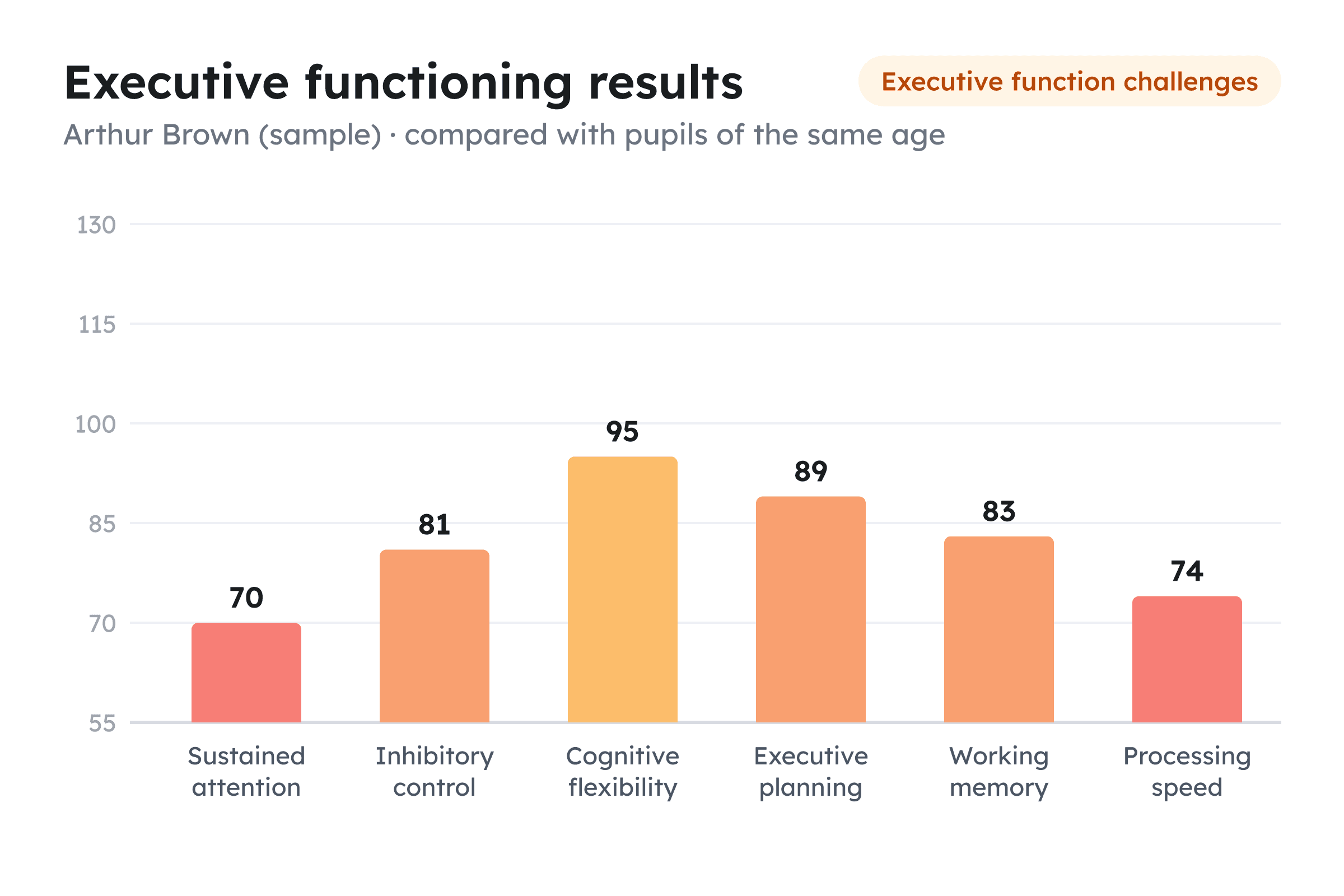
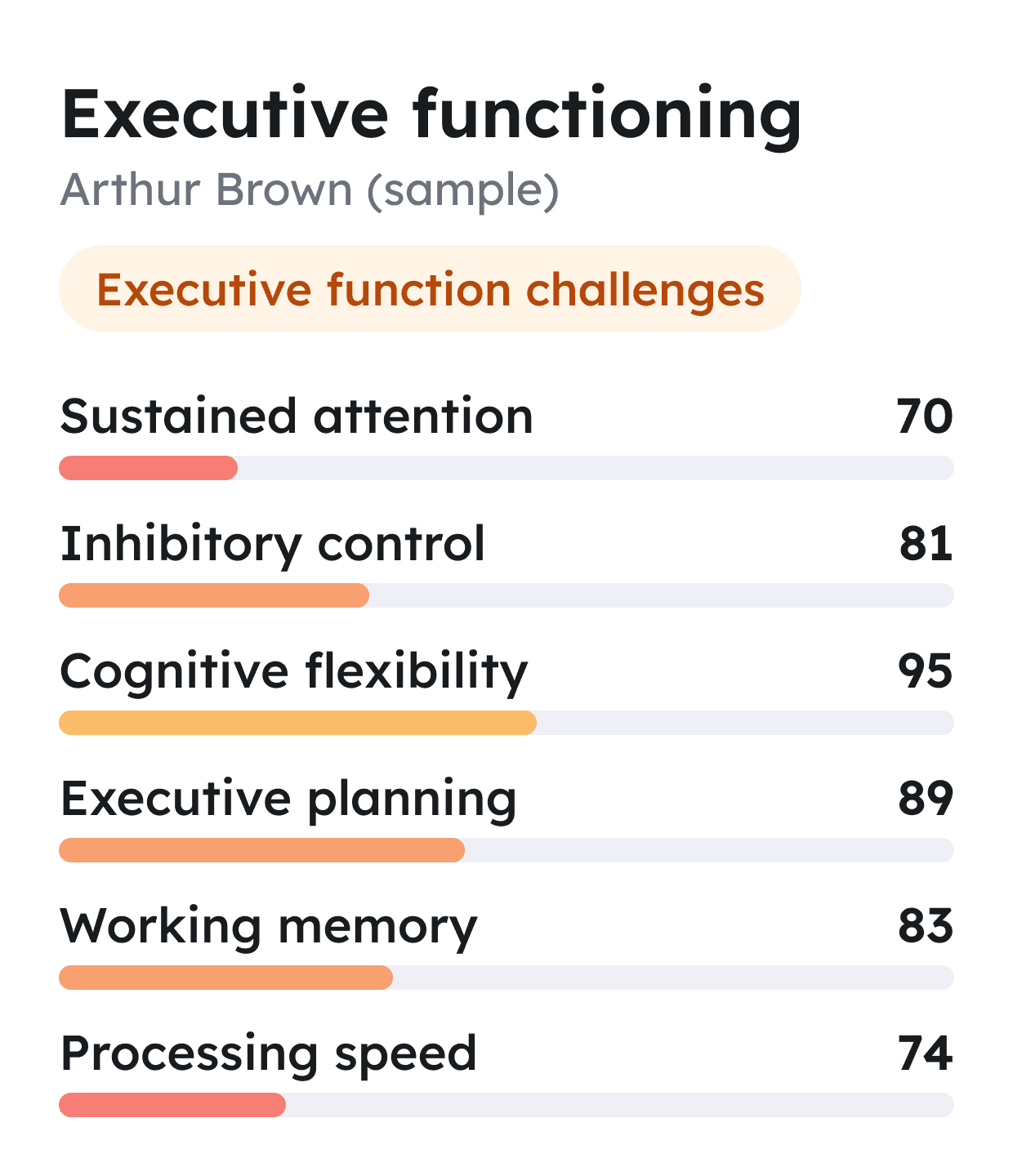
  • Results chart from Talamo’s sample Executive Function report for Arthur Brown, a fictional secondary pupil: standard scores of 70 for sustained attention, 81 inhibitory control, 95 cognitive flexibility, 89 executive planning, 83 working memory and 74 processing speed, with the result ‘Executive function challenges’.
  • Scores table from Arthur Brown’s sample Executive Function report, showing each area’s standard score, score rank, percentile rank and 95% confidence interval.
  • How to support Arthur

    For subject teachers. Practical strategies for secondary lessons.

    Add brief response checks to longer teaching

    Arthur’s lower attention score suggests clear checkpoints may help.

    Pause at one or two natural points in a longer explanation and ask Arthur to recall or apply one key idea.

    Build in one final check

    Arthur’s lower inhibitory-control score suggests a pause before responding may help.

    Before Arthur hands in work, use one check linked to the task, such as whether every part of a question has been answered.

    Build thinking time into harder tasks

    Arthur’s lower processing speed may make demanding tasks take longer.

    Keep the question visible and let Arthur make a brief note before responding.

  • Insights from Arthur Brown’s sample Executive Function report: a very high level of need and the result ‘Executive function challenges’, with the report’s explanation.
  • Results from Talamo’s sample Executive Function report for Arthur Brown, a fictional secondary pupil: sustained attention 70, inhibitory control 81, cognitive flexibility 95, executive planning 89, working memory 83 and processing speed 74, with the result ‘Executive function challenges’.
  • Scores from Arthur Brown’s sample Executive Function report, showing each area’s standard score, score rank and percentile rank.
  • How to support Arthur

    For subject teachers.

    Add brief response checks

    His lower attention score suggests checkpoints may help.

    Pause once or twice in a long explanation to check one key idea.

    Build in one final check

    His lower inhibitory-control score suggests a pause may help.

    One check linked to the task before work is handed in.

Inside an Executive Function report

Use the arrows to look through four parts of the sample report of Arthur Brown, a fictional secondary pupil.

1

Insights

His level of need and executive function result, each explained in a few plain sentences.

2

Results

His scores in six areas on one chart, compared with pupils of the same age.

3

Scores

Each standard score with its score rank, percentile rank and 95% confidence interval.

4

How to support

Practical next steps matched to his profile and year group. Use the tabs to switch between the classroom, extra support and home.

See Arthur’s full report (PDF)

The challenges indicator

The challenges indicator

The challenges indicator

One of three outcomes, set by a fixed rule across the five executive function areas, so the same profile always gives the same result. It describes measured performance and never uses diagnostic labels.

One of three outcomes, set by a fixed rule across the five executive function areas, so the same profile always gives the same result. It describes measured performance and never uses diagnostic labels.

No challenges

The profile doesn’t meet the threshold. Individual areas can still show relative weaknesses worth attention, and the profile shows where.

The profile doesn’t meet the threshold. Individual areas can still show relative weaknesses worth attention, and the profile shows where.

Challenges

One area is markedly below the typical range for the pupil’s age, or there’s a broader pattern of below-average results across several areas. The report names the areas driving the result.

One area is markedly below the typical range for the pupil’s age, or there’s a broader pattern of below-average results across several areas. The report names the areas driving the result.

Inconclusive

Too much of the profile has unusual results to score reliably.

Too much of the profile has unusual results to score reliably.

Inconclusive never means no challenges. A retest is recommended.

Level of Need

Level of Need

Level of Need

How much support a pupil may need overall. It draws on every Talamo assessment they complete, so it becomes better grounded as they take more.

How much support a pupil may need overall. It draws on every Talamo assessment they complete, so it becomes better grounded as they take more.

Low

Ordinary classroom teaching is enough.

Ordinary classroom teaching is enough.

Medium

Targeted support in one area.

Targeted support in one area.

High

Structured support across more than one area.

Structured support across more than one area.

Very high

Intensive support; specialist involvement is worth considering.

Intensive support; specialist involvement is worth considering.

Built into every report

Checked by a person

Every report is reviewed by Talamo before release, normally within 48 hours.

Unusual results flagged

A score far outside the typical range prompts a review, not a verdict. Check supervision, access needs and device issues before arranging a retest.

Pupil data kept private

The AI that drafts the written explanation in each report sees pseudonymised scores and context only, never a pupil’s name or other identifying details. Pupil data is stored in the UK.

Sample reports

See an Executive Function report

See an Executive Function report

See an Executive Function report

Two fictional pupils with very different results. Emily (primary) has no executive function challenges, though her working memory and processing speed are low. Arthur (secondary) has challenges driven by attention, inhibitory control and working memory. Both reports end with support for the classroom, the SENCo and home.

Two fictional pupils with very different results. Emily (primary) has no executive function challenges, though her working memory and processing speed are low. Arthur (secondary) has challenges driven by attention, inhibitory control and working memory. Both reports end with support for the classroom, the SENCo and home.

See all sample reports

Pages from Talamo’s sample Executive Function report for Emily Hargreaves, a fictional primary pupil: the cover and her executive functioning results chart.

The evidence behind it

The evidence behind it

The evidence behind it

Developed in staged research with UK schools: a pilot, task refinement, then standardisation. The figures below come from our Executive Function technical documentation (September 2026).

Developed in staged research with UK schools: a pilot, task refinement, then standardisation. The figures below come from our Executive Function technical documentation (September 2026).

560

560

560

pupils aged 7 to 16, in 13 schools across England, make up the current norms (spring 2026).

0.84–0.98

0.84–0.98

0.84–0.98

reliability for the ten task measures tested so far (1.0 would mean perfectly consistent), from the pilot study.

About 8%

About 8%

About 8%

of pupils in the standardisation study were flagged for challenges. The threshold was set with the expected rate of marked difficulty in mind.

Built on established tasks

Digital versions of extensively researched tasks, including the Sustained Attention to Response Task, the Eriksen flanker task, rule-switching and tower planning. Numbers Reversed and Verbal Attention are adapted from the Woodcock-Johnson IV, developed in partnership with its publisher, Riverside Insights.

Refined on pilot evidence

Nine tasks were piloted with 238 pupils in 14 schools between January and March 2026. Two were replaced on that evidence: Flanker, for example, replaced a Stroop task whose response times varied too much to interpret. A task keeps its place only while the data supports it.

Good to know

What screening can and can’t tell you

What screening can and can’t tell you

What screening can and can’t tell you

Screening gives you an evidence-based starting point. Read results alongside classroom work, your own observations and the conditions on the day.

Screening gives you an evidence-based starting point. Read results alongside classroom work, your own observations and the conditions on the day.

Performance, not behaviour

Performance, not behaviour

Performance, not behaviour

The assessment measures how a pupil performs on structured tasks, which can differ from how they manage attention and self‑regulation in class. Both kinds of evidence matter.

The assessment measures how a pupil performs on structured tasks, which can differ from how they manage attention and self‑regulation in class. Both kinds of evidence matter.

A snapshot on the day

A snapshot on the day

A snapshot on the day

Executive function performance is sensitive to sleep, mood and motivation. If a result surprises you, talk it through with the pupil, and consider a retest where results are unusual or inconclusive.

Executive function performance is sensitive to sleep, mood and motivation. If a result surprises you, talk it through with the pupil, and consider a retest where results are unusual or inconclusive.

Low scores everywhere

Low scores everywhere

Low scores everywhere

Low scores across every area, including processing speed, are more consistent with general learning difficulty than with a specific executive function profile.

Low scores across every area, including processing speed, are more consistent with general learning difficulty than with a specific executive function profile.

Early norms and reliability

Early norms and reliability

Early norms and reliability

The norms come from a first standardisation study of 560 pupils, almost all in state comprehensive schools. An update using a larger cohort is planned, and every report records the norm version it used. Two of the scores, from Block move and Left or right, don’t yet have their own reliability estimates.

The norms come from a first standardisation study of 560 pupils, almost all in state comprehensive schools. An update using a larger cohort is planned, and every report records the norm version it used. Two of the scores, from Block move and Left or right, don’t yet have their own reliability estimates.

The assessment also doesn’t track progress over time or measure response to intervention, so keep using your own monitoring to see whether support is working.

The assessment also doesn’t track progress over time or measure response to intervention, so keep using your own monitoring to see whether support is working.

Questions about Executive Function

Questions about Executive Function

Questions about Executive Function

Quick answers about this assessment and its results.

Quick answers about this assessment and its results.

Does this assessment diagnose attention difficulties?

Does a reported diagnosis change the result?

Are results as reliable for younger pupils?

What should we do if a pupil is flagged?

Still have a question?

Talk to our team

What could this assessment show about your pupils?

What could this assessment show about your pupils?

What could this assessment show about your pupils?

Book a call with our team. We’ll walk you through a sample report and answer your questions.

Book a call with our team. We’ll walk you through a sample report and answer your questions.

Arthur’s report

Sample report · Executive Function

Working memory

Low

Inhibitory control

Average

Planning

Below average

Book a call

With our team

Talamo

Designed for parents and teachers to spot learning patterns early and clearly.

Get updates from Talamo

A monthly email with news, research and event updates for SENCos, schools and families.

© Talamo Limited 2026. Registered in England and Wales, company number 13714418. Registered office: 3 Buckland House, William Prance Road, Plymouth PL6 5WR.

Talamo

Designed for parents and teachers to spot learning patterns early and clearly.

Get updates from Talamo

A monthly email with news, research and event updates for SENCos, schools and families.

© Talamo Limited 2026. Registered in England and Wales, company number 13714418. Registered office: 3 Buckland House, William Prance Road, Plymouth PL6 5WR.

Talamo

Designed for parents and teachers to spot learning patterns early and clearly.

Get updates from Talamo

A monthly email with news, research and event updates for SENCos, schools and families.

© Talamo Limited 2026. Registered in England and Wales, company number 13714418. Registered office: 3 Buckland House, William Prance Road, Plymouth PL6 5WR.